










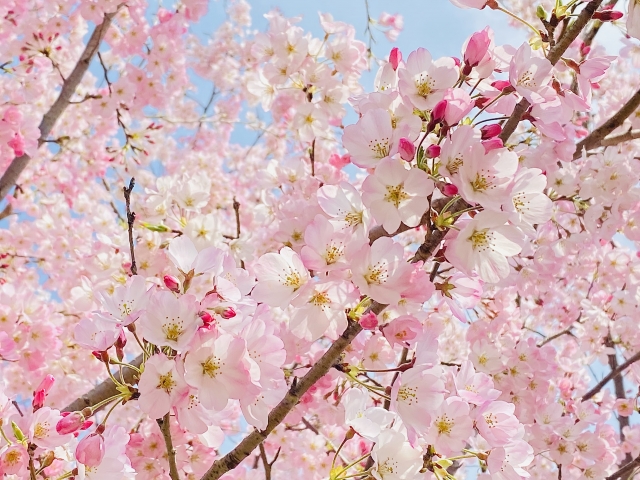
My customers who visit Japan in May often ask me, “Aren’t the cherry blossoms in bloom?” They knew that Japanese cherry blossoms bloom in spring, but not exactly when in spring.
Cherry blossoms hold a special place in the hearts of the Japanese. Every year, as spring approaches, weather forecasts are accompanied by reports predicting when the cherry blossoms will bloom. Of course, as mere mortals, we cannot control nature, so it is impossible to know exactly when the cherry blossoms will bloom. Furthermore, even when the cherry blossoms finally bloom, heavy rain or a sudden rise in temperature can cause them to be lost in an instant.
We Japanese find cherry blossoms beautiful, partly because of their transience. The capricious cherry blossoms, which are compared to life itself, have always been a theme in literature.
Cherry blossoms usually bloom from late March to early April. Since Japan is a long country, the timing of their bloom varies from region to region. In Hokkaido, in northern Japan, for example, cherry trees bloom from late April to early May.
There are cherry trees that bloom early. They are called Kawazu-zakura and usually bloom in February.
Plum blossoms bloom in late January or early February.
You can still enjoy the flowers even outside the peak tourist season in March and April.
Once the cherry blossom season is over, the irises come next. There are several famous iris locations in Japan.
Once the iris season is over, the rainy season begins in Japan. The representative flower of the rainy season is the hydrangea. Hydrangeas also have famous locations throughout the country.
Summer is extremely hot and it is typhoon season, so I would not recommend travelling to Japan at this time of year.
The representative flower of autumn is the chrysanthemum. The chrysanthemum is Japan’s representative flower, and the Japanese passport bears the chrysanthemum crest.
In addition, although their flowering season is very limited, if you happen to be in Japan when the red spider lilies are in bloom, I would highly recommend visiting a colony of them. They usually bloom from mid to late September.
Camellia blossoms can be seen in winter.
The Japanese look forward to the various flowers that bloom throughout the seasons.
The timing of flowering is inevitably subject to the whims of nature. So if you want to enjoy flowers in Japan, don’t plan too busy a schedule. Instead, gather information locally and head straight to the flower gardens you want to see.
My small travel agency will of course be happy to provide information about the blooming of such flowers.
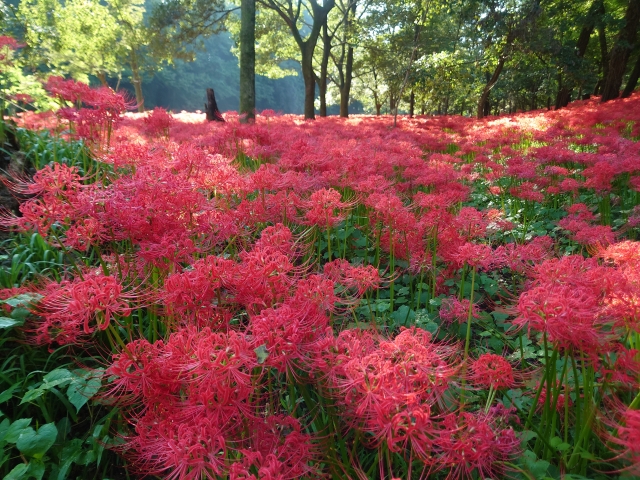
▲the red spider lilies